Кінець листопада та початок грудня для команди проєкту Еразмус+ (ERASMUS Jean Monnet) «Антикорупційні європейські стандарти як запорука формування громадянського суспільства» були насичені подіями та зустрічами.
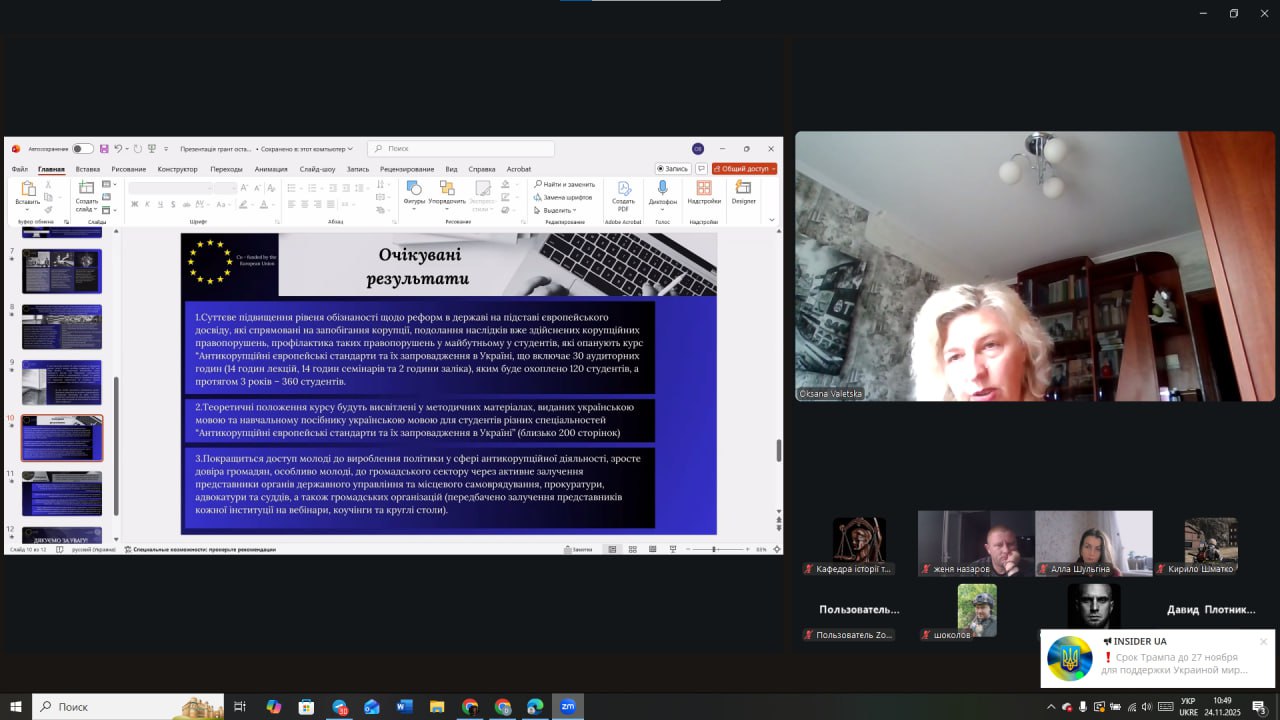
24 листопада відбулася презентація курсу «Антикорупційні європейські стандарти та їх запровадження в Україні» в онлайн-форматі (Zoom-конференція) для студентів першого курсу Навчально-наукового інституту післядипломної освіти спеціальності «Право» (гр. 151з). Участь взяли дев’ять студентів, яких зацікавив запропонований факультатив. Змішана форма навчання та можливість бути присутніми на Zoom-конференціях сприяють повному опануванню курсу.
25 листопада презентація була проведена для студентів груп 108, 109 факультету комп’ютерних наук (27 студентів офлайн). Окрім команди проєкту, участь взяла вчений секретар, канд. соціол. наук, доцент Чорна В.О.. Студенти ознайомилися з тематикою курсу, актуальністю впровадження європейських антикорупційних стандартів, різними стратегіями боротьби з корупцією та важливістю вдосконалення вітчизняного законодавства. У цей же день презентація відбулася для студентів 1 курсу факультету економічних наук (гр. 111, 115, 116, 117). На зустрічі були присутні 39 студентів, яких зацікавила тематика курсу, особливості проведення семінарів та можливість участі у Круглому столі.
26 листопада команда проєкту представила курс студентам 1 курсу юридичного факультету (гр. 151–152) та факультету політичних наук, спеціальність «Середня освіта (історія та громадянська освіта)» (гр. 133). Участь взяли члени команди проєкту: к.ю.н., доцент Валецька О.В. та к.ю.н., доцент Ткаля О.В.. Зустріч проходила у змішаному форматі (26 студентів офлайн, 6 онлайн). Команда ознайомила учасників з актуальністю впровадження європейських антикорупційних стандартів в освітній простір задля формування майбутнього держави, вільної від корупційних ризиків.
2 грудня презентація була проведена для студентів груп 101, 102 ФКН (37 студентів офлайн). Студенти ознайомилися з тематикою курсу, актуальністю впровадження європейських антикорупційних стандартів, різними стратегіями боротьби з корупцією та важливістю вдосконалення законодавства. Члени команди пояснили особливості вибору дисциплін загального циклу та можливості зарахування сертифікованого факультативу як вибіркової дисципліни.
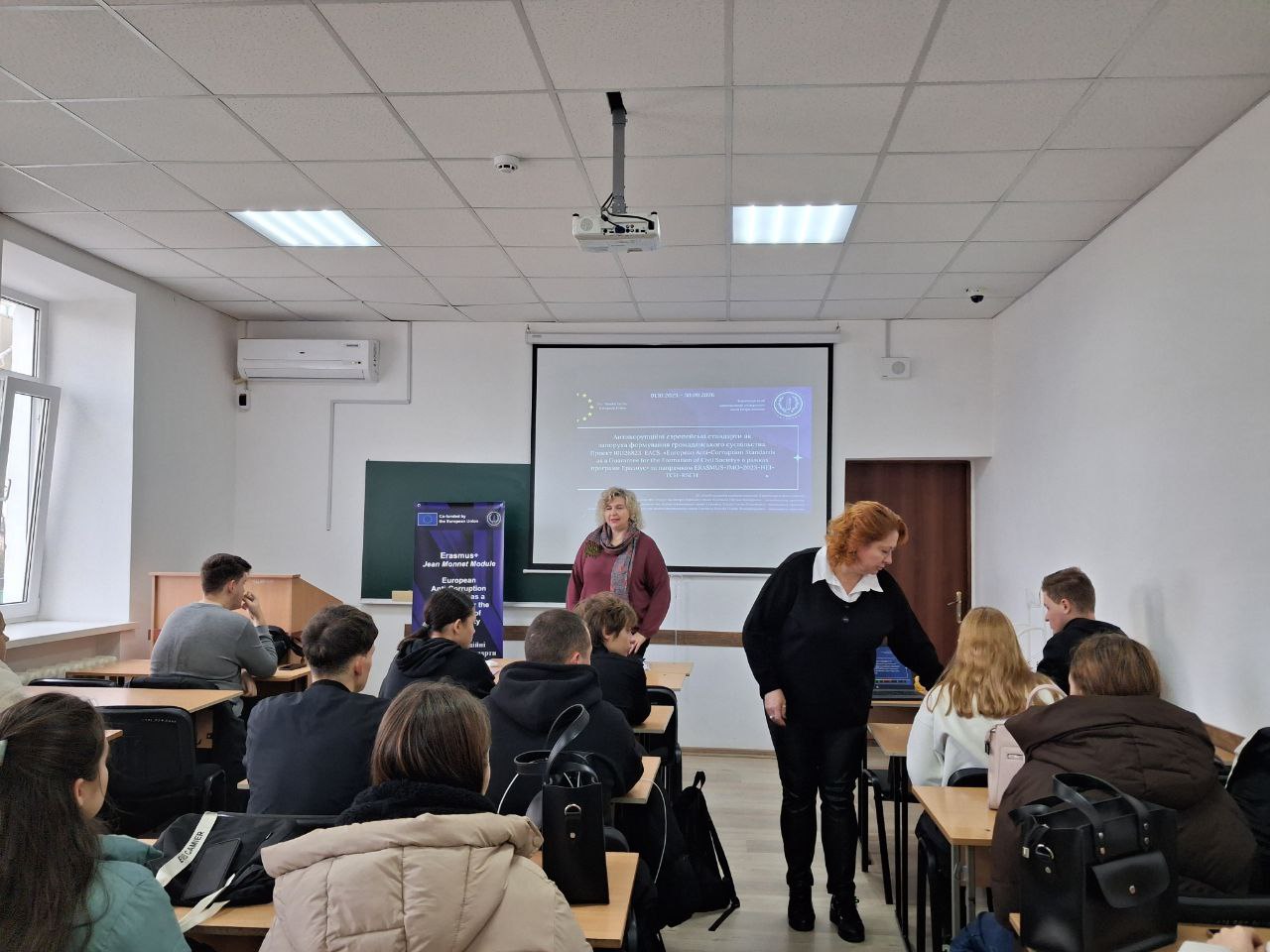
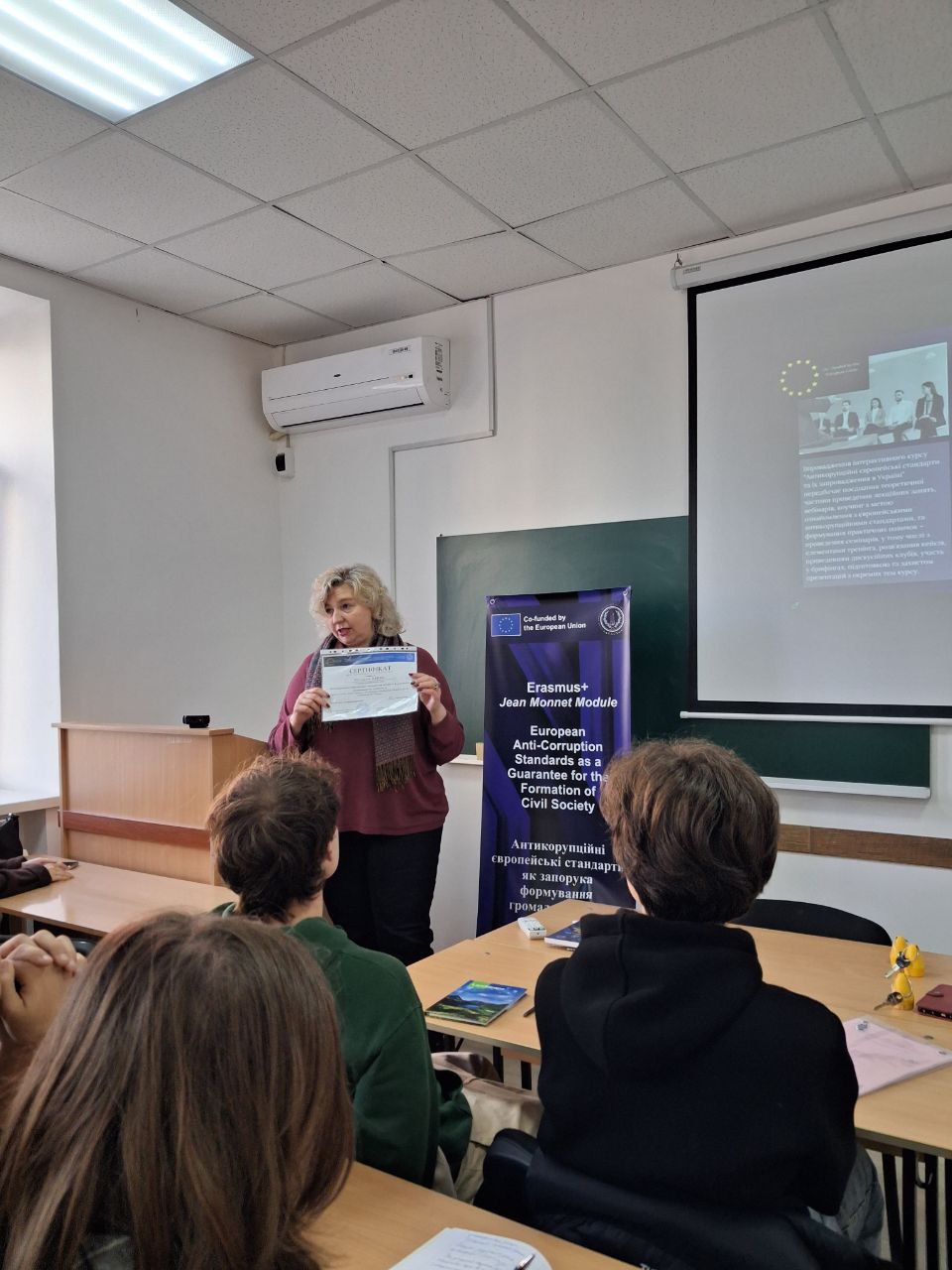
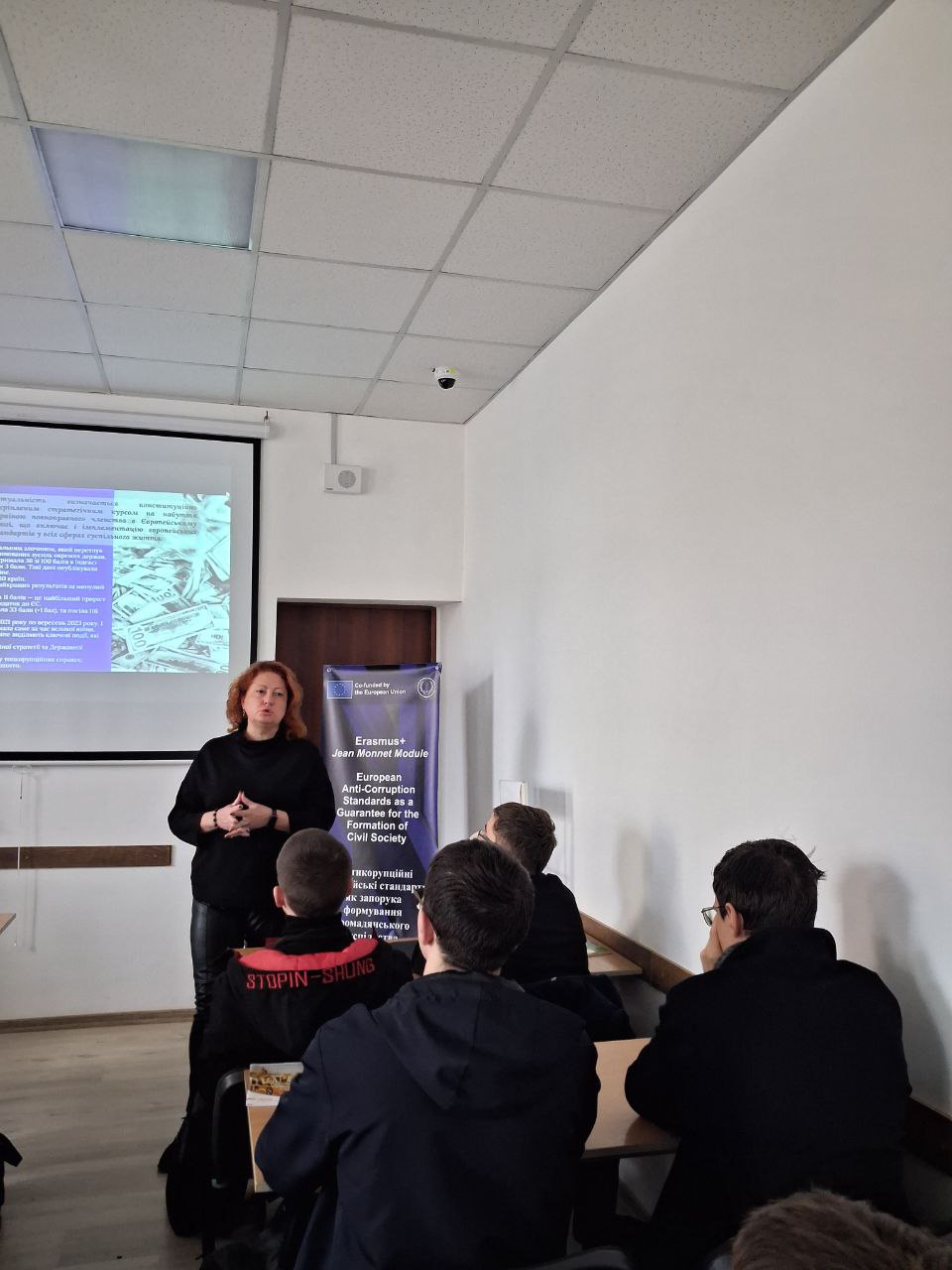
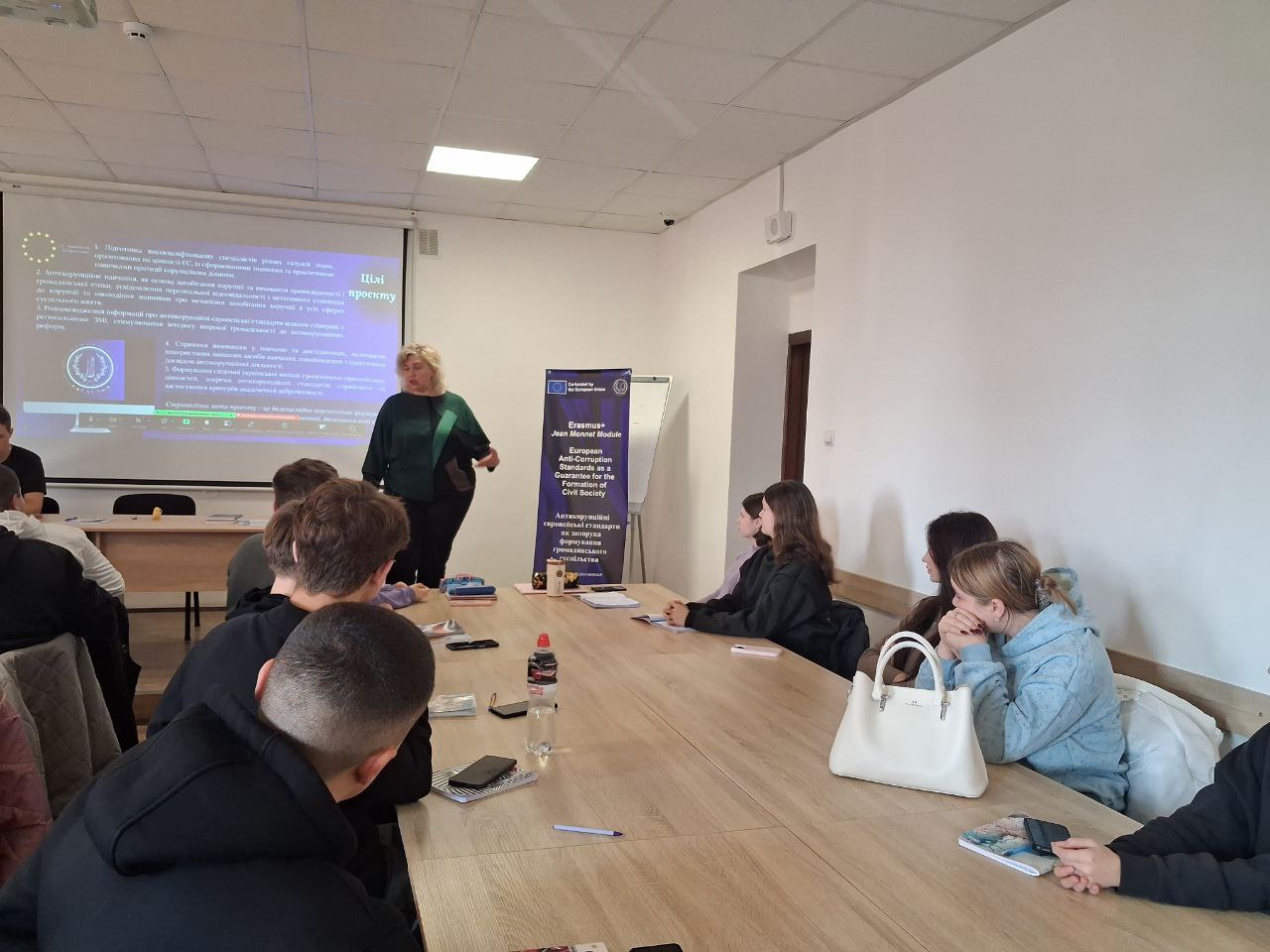
The end of November and the beginning of December were eventful and full of meetings for the Erasmus+ (ERASMUS Jean Monnet) project team “European Anti-Corruption Standards as a Guarantee for the Formation of Civil Society”.
On 24 November, the course “European Anti-Corruption Standards and Their Implementation in Ukraine” was presented online via Zoom for first-year students of the Educational and Scientific Institute of Postgraduate Education, specialising in Law (group 151z). Nine students interested in the proposed elective attended. The blended format and the opportunity to join Zoom sessions help students fully master the course.
On 25 November, a presentation was held for students of groups 108 and 109 of the Faculty of Computer Science (27 students offline). The project team was joined by the scientific secretary, Candidate of Sociological Sciences, Associate Professor V.O. Chorna. Students were introduced to the course topics, the relevance of implementing European anti-corruption standards, strategies for combating corruption, and the importance of improving domestic legislation. On the same day, a presentation was held for first-year students of groups 111, 115, 116, and 117 (Faculty of Economic Science). Thirty-nine students attended, showing interest in the course, the seminar format, and the opportunity to participate in a round table.
On 26 November, the project team presented the course to first-year students of the Faculty of Law (groups 151–152) and the Faculty of Political Science, specialising in Secondary Education (History and Civic Education) (group 133). The meeting was attended by project team members O.V. Valetska, PhD in Law, Associate Professor, and O.V. Tkalya, PhD in Law, Associate Professor. The session was held in a blended format (26 students offline, 6 online). The team highlighted the relevance of implementing European anti-corruption standards in the educational space to shape the future of a state free from corruption risks.
On 2 December, a presentation was held for students of groups 101 and 102 of the Faculty of Computer Science (37 students offline). Students were introduced to the course topics, the relevance of European anti-corruption standards, strategies for combating corruption, and the importance of improving domestic legislation. The team explained the specifics of choosing general cycle disciplines and the possibility of enrolling in the certified elective course as a selective discipline.